
On the Frontlines: Land and Environmental Defenders in the Democratic Republic of Congo
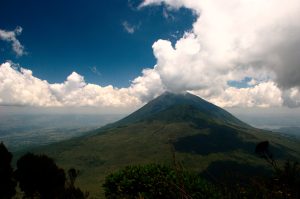
The Democratic Republic of the Congo is home to one of the world’s most important ecological treasures: the Congo Rainforest, the second largest tropical rainforest, and the largest carbon sink in the world.1. An estimated 60% of the Congo Basin rainforest is found in this one country and these forests play a pivotal role in regulating the global climate while supporting millions of Indigenous peoples and local communities. At the same time, it has become critical to facilitating the global energy transition and clean technologies through its critical minerals, like cobalt, gold, coltan and lithium.
It is no wonder the DRC has been positioned a “solution country” for climate change.
This combination of ecological and mineral wealth has attracted powerful commercial interests, consequently intensifying competition over land and natural resources. The scramble for DRC’s resources is further exacerbated by State leaders and officials who promote logging and oil exploration for economic development and sources of investment.2
Conflict in Congo and Communities Caught in Between
For many communities in the DRC and Africa at large, land is more than an economic asset to be exploited for economic benefit and control, it is an integral part of their culture, identity and well-being. The conflict in the DRC has resulted in displaced communities and extremely poor economic conditions which subsequently endangers the biodiversity and causes severe environmental degradation. These compounding socio-economic problems are further exacerbated by poaching, pollution and extractive activities.
In 2025, the UN Special Rapporteur expressed concern for defenders in the DRC, specifically for defenders in eastern DRC where unlawful detention, disappearances, torture and targeted reprisals is increasing. This security concern has worsened with armed groups expanding their occupation and their operations in North Kivu, South Kivu and Ituri Provinces.
Resource Contestation
Protected conservation areas have become a seriously contested space in the DRC, where those responsible for safeguarding protected biodiversity and the communities within, have faced repeated threats from multiple actors simultaneously while protecting parks from poaching and illegal environmental exploitation.
The Virunga National Park, Africa’s oldest national park and a United Nations Educational, Scientific and Cultural Organisation (UNESCO) World Heritage Site, is currently listed as World Heritage Sites in Danger because of the destruction of biodiversity due to conflict and resource exploitation. The Kahuza-Biega, Salonga, Okapi Wildlife Reserve and the Garumba National Parks have also been included on this list for the same reasons.
African Environmental Defenders Emergency Fund responding to escalating threats in the DRC
The African Environmental Defenders Emergency Fund has witnessed a significant increase in emergency assistance requests from the Democratic Republic of Congo (DRC), with applications rising by approximately 86% since 2024. During this period, the Fund has supported more than 60 environmental human rights defenders and affected communities from the DRC facing urgent protection needs.
This sharp increase reflects a deteriorating human rights environment in which individuals and communities seeking to defend their rights to land, a healthy environment, livelihood, participation, and access to natural resources are increasingly subjected to intimidation, arbitrary arrest, violence, displacement, and other forms of reprisals including murder.
The rise in applications highlights not only the escalating threats confronting environmental defenders, but also the growing constraints on civic space and the persistent failure of protection mechanisms to adequately safeguard those exercising their fundamental human rights.
Our Collective Responsibility to the Defenders in the DRC
The significant increase in applications to the Emergency Fund reflects a heightened need for protection. It underscores the urgent need for enhanced protection measures, accountability for violations against defenders, and sustained support to ensure that environmental human rights defenders can carry out their legitimate work without fear of retaliation.
It is the collective responsibility of all global citizens and actors to protect those who protect our biodiversity and planet, and incumbent on all relevant stakeholders and actors to act against reprisals and attacks against defenders.
As civil society, we must ensure that we amplify their voices, support them in asserting their rights – which is increasingly essential in ensuring a just, sustainable future for the Democratic Republic of Congo and the world.


